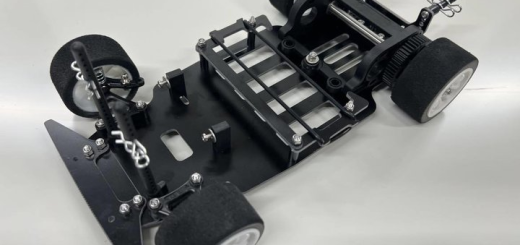
Best Indoor RC Racing Cars for Beginners 2026: The Essential Guide to No-Fuss On-Road RC Racing
This guide is designed for anyone looking to enter the world of radio-controlled racing—whether you are an adult hobbyist or a parent guiding a junior racer. At our club, we measure success by “Uptime”: the amount of track time you get versus the time spent frustrated in the pits.
Priority 1: The “Uptime” Strategy
- Performance = Robustness: For your first 6 months, “performance” is measured in durability, not top speed. A car that finishes every race is faster than a “rocket ship” that breaks in the first corner.
- The “Sacrificial” Car: Your first car is a trainer. It will take a beating. We choose platforms where “sacrificial” parts (like suspension arms) are designed to break to save the expensive chassis, and are cheap to replace.
- Competing Against Yourself: In qualifying, you are racing the clock. Consistency is the goal; focus on your own improvement.
1. Choosing Your Chassis: The Four Paths
[IMAGE PLACEHOLDER: A lineup of the four recommended chassis styles—FTX Banzai, Kamtec Hot Hatch, Carten T410, and Tamiya TT-02]
| Option | Style | Build Type | The Beginner Reality |
|---|---|---|---|
| FTX Banzai | 1/10 Touring | Ready to Run (RTR) | The Plug-and-Play Choice. Best for immediate action. Extremely robust and includes everything in the box. |
| Kamtec Hot Hatch | 1/12 Foam | Almost Ready to Run (ARTR) | The Foam Tyre Alternative. A pre-built “rolling chassis.” Incredibly tough and easy to drive. Requires full electronics. |
| Carten T410 / Louise LDX | 1/10 Touring | Almost Ready to Run (ARTR) | The Middle Ground. Pre-assembled chassis. Robust like the Banzai but built for racing gear. Requires full electronics. |
| Tamiya TT-01E / TT-02 | 1/10 Touring | Kit (Build from Scratch) | The Modeller’s Choice. Kit build. Requires immediate mechanical upgrades. Requires Servo, Battery, and Adapter. |
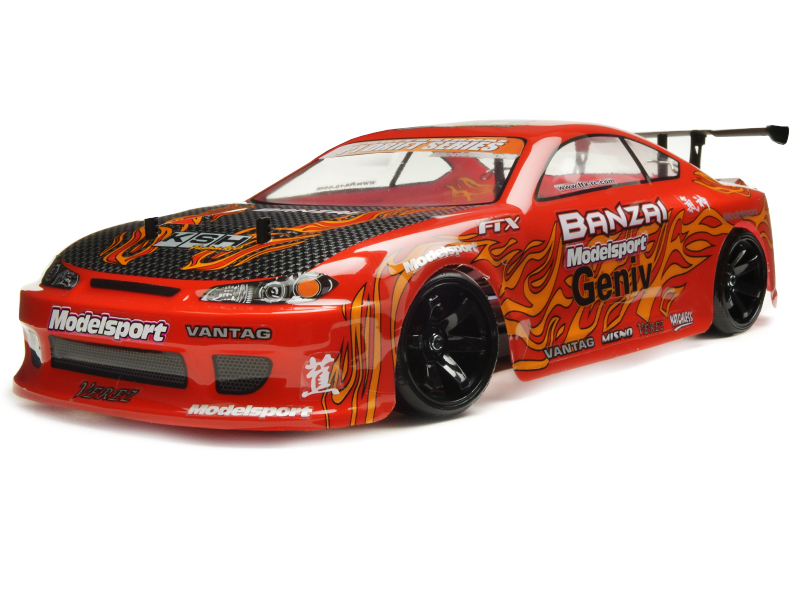
FTX Banzai
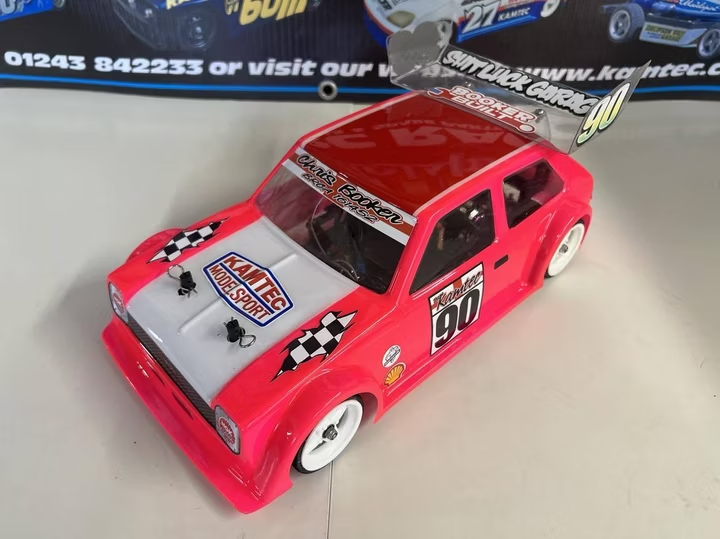
Kamtec Hot Hatch
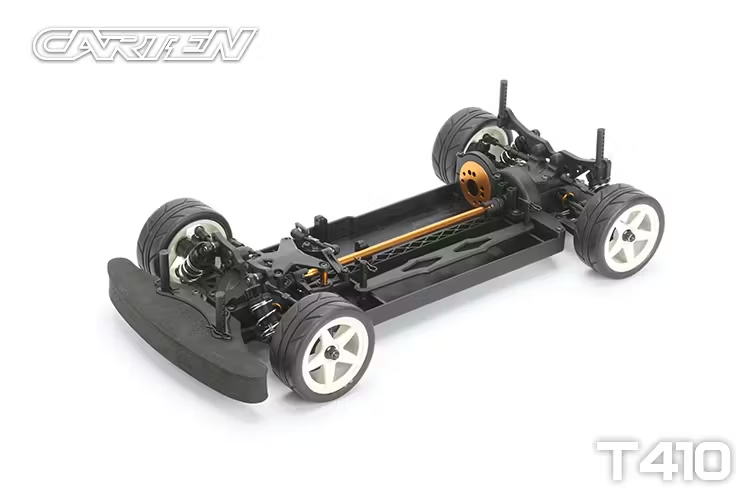
Carten T410 ARTR / Louise RC LDX
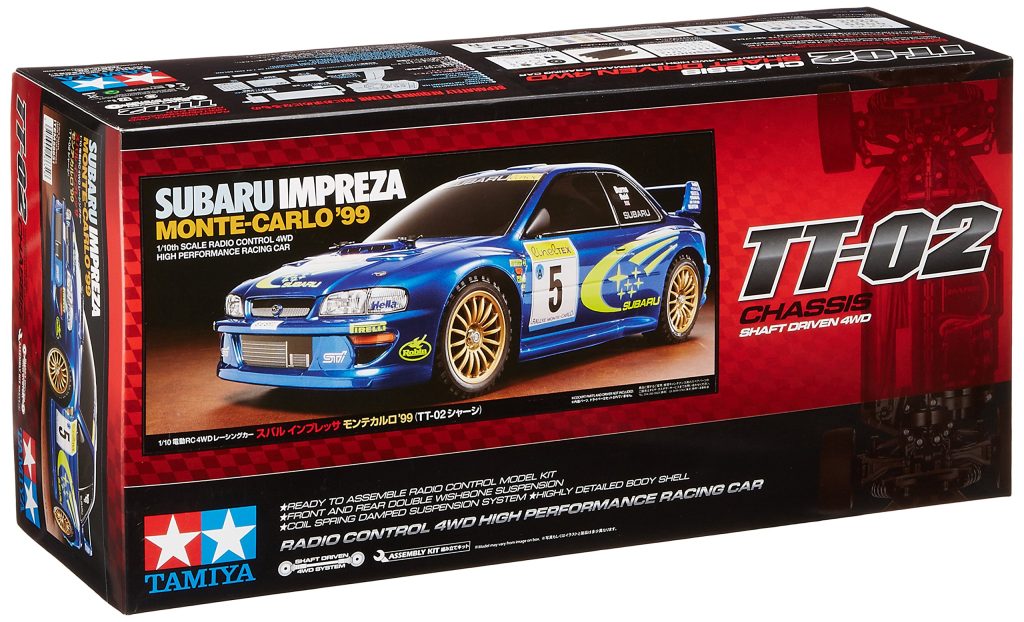
Tamiya TT-02 / TT-01E
2. Electronics: What Do You Actually Need?
Different cars require different levels of investment to get them on the track:
- FTX Banzai (RTR): Needs nothing to start. It comes with a transmitter, motor, ESC, and servo already installed.
- Tamiya Kits: Usually include the Motor and ESC, which are perfectly fine to get you started. You will only need to buy a Transmitter complete with Receiver, Steering Servo, LiPo Battery, and a battery wire Adapter.
- Carten & Kamtec (ARTR): These are “rolling chassis.” You need to buy the full suite of electronics (Transmitter/Receiver, Motor, ESC, Servo, and Battery).
3. The “Standard” Electronics List
[IMAGE PLACEHOLDER: Comparison of a Deans (T-Plug) vs. a white Tamiya connector]
- Motor & ESC: Core RC 21T or 27T Brushed Motor and the Hobbywing QuicRun 1060. CRITICAL: Select the “Deans” (also known as a T-Plug) version of the 1060 ESC.
- Steering Servo: Power HD 6001HB. A reliable and fast entry-level choice for all chassis.
- Battery: We recommend a 2S Shorty Hard Case LiPo (93mm or 96mm long) with 5mm bullet connectors. Intellect is a great, reliable brand to start with.
Why Shorty Packs? These batteries are highly versatile and used in a huge number of racing classes. They fit modern racing chassis perfectly and retain excellent resale value if you eventually change classes.
- Adapters:
- If using the Hobbywing 1060 ESC: You need a Deans (T-Plug) to 5mm Bullet adapter.
- If using stock FTX/Tamiya electronics: You need a Tamiya to 5mm Bullet adapter.
4. The Tamiya “Mechanical” Upgrades
If you buy a Tamiya kit, you must install these upgrades during the build to make it track-viable:
- Full Ball Bearing Set (~£22): Do not build without these. Plastic bushings will melt and slow the car down almost immediately.
- Aluminium Steering Upgrade (~£17): Essential to remove the massive “slop” (wobble) in the stock steering.
- Oil-Filled Shocks (~£25): Stock friction dampers are too bouncy; oil shocks are essential for carpet racing.
5. Tyres & Traction
- Rubber (1/10th Cars): Rush 28X Pre-Glued (RU0362). These are the club standard for carpet grip.
- Foam (1/12th Kamtec): Contact “Control” Tyres. Foam tyres are very forgiving for beginners.
- Tyre Additive: To get grip on the carpet, you need SXT 3.0 or Spider Grip Blue. Avoid MR33 as some versions are oil-based and will ruin the club carpet. Ask a member to show you how to apply it!
6. Transmitters: Wheel vs. Sticks
The choice between a “Wheel” (Pistol Grip) or “Sticks” controller is personal. We recommend asking to hold or try a member’s radio at the club before committing to a purchase.
- Wheel Recommendation: FlySky FS-GT5. High value with built-in stability (Gyro).
- Stick Recommendation: Sanwa Gemini Sport. The premium entry for stick control.
- Compatibility: Buying a set that includes the matching receiver makes life simple and ensures everything works together.
7. The Charger & LiPo Safety
- Recommended Charger: SkyRC T100 AC/DC (~£48). This is an “all-in-one” solution that plugs directly into a UK wall socket. No separate power supply needed.
- Mandatory Safety: You MUST use a LiPo Sack/Bag (~£8) when charging. This is a non-negotiable safety rule at our club.
8. Timing: Personal Transponders
To record lap times, you will eventually need a personal transponder. You don’t need this on day one, as we can often loan you one to get started.
- Recommendation: An “MRT Transponder” from Model Race Technology. They are cost-effective and compatible with the timing systems used by our club and most others in the UK.
9. Bodies: “Sacrificial” Shells & Painting
Bodies take the hits so the chassis doesn’t. Expect your first few shells to look “second-hand” fairly quickly!
- FTX Banzai: Comes with a pre-painted body ready to go.
- Tamiya & Kamtec Kit: Usually supplied with a clear Lexan (Polycarbonate).
- Carten T410 ARTR / Louise RC LDX: Not supplied with a body shell – you need to choose one (most 1/10th scale on road “touring car” shells will fit and be suitable)
- The Rules of Painting: You must use Lexan Paint (e.g., Tamiya PS sprays). Normal car paint will flake off. You paint from the INSIDE of the shell.
- Cost: Budget ~£15 for two cans of Lexan spray paint. DO NOT buy “ABS” plastic bodies.
Fitment & Sizes:
- 1/10th Touring Cars: Look for shells that are 190mm wide with a standard 257mm wheelbase (this doesn’t have to be mm perfect as you’ll cut the wheel arches yourself). This ensures a perfect fit for the Tamiya, Carten, and FTX chassis. (Avoid 200mm shells, as these are designed for nitro cars and will be too wide).
- 1/12th Kamtec: Use 1/12th scale “hatch” or “GT” style bodies specifically designed for this shorter wheelbase. Wheelbase is approx 205mm.
10. Carry Bags & Pit Equipment
[IMAGE PLACEHOLDER: A professional racing hauler next to a standard DIY tool bag]
- Bags: You can eventually buy a purpose-designed racing hauler bag with drawers, but to get started, a standard sturdy DIY/Contractor tool bag is a perfect, affordable choice.
- Pit Mat: Essential for protecting the club’s tables from scratches and spills.
- Setup Plate & Car Stand: A flat surface (like glass) to ensure the car is straight, and a stand to prevent tyre flat-spotting.
- Toolkit: Metric Hex Drivers (1.5mm, 2.0mm, 2.5mm) and a 7.0mm Nut Driver for wheel nuts.
- Bodyshell tools: If you’re spraying your own Lexan Bodyshell you’ll also want a pair of Bodyshell scissors (curved) designed for cutting lexan. Ideally – though you can likely borrow one, a “body reamer” for making holes for the body to attach to the chassis.
11. Mandatory Spares (The “Save My Night” Kit)
- FTX Banzai: Front Lower Arms (FTX6581) & Steering Knuckles (FTX6573).
- Kamtec: Spare Wishbones and 32DP Spur Gears.
- Carten T410: Suspension Arm Set (NHA402) & 48DP Spur Gear (NBA252).
- Tamiya TT-02 Spares: B Parts (Suspension Arms – 51528), A Parts (Uprights/Hubs – 51527), and Driveshafts (51006).
- Tamiya TT-01E Spares: B Parts (Arms – 51003) and A Parts (Uprights – 51318).
- Universal: Spare Body Clips and a box of assorted M3 Screws.
12. Recommended UK Model Shops
- Schumacher Racing Cars: Best for Core RC, Tools and Rush Tyres.
- MB Models: Best for Core RC, Carten, and Rush specialist.
- Wheelspin Models: Best for FTX, Tamiya, and Tools.
- SC Models (Stevenage): Your local experts for advice and kits.
- Rage Modelsport (PBM): The go-to for Carten spares.
- Kamtec Modelsport: For Hot Hatch and 1/12 scale bodies.
13. Other Considerations: BRCA Membership
Before you can legally race at most clubs in the UK, including ours, you must have BRCA (British Radio Car Association) membership. This isn’t just a “club card”—it is your primary source of insurance.
- Why you need it: It provides you with specialized third-party public liability insurance. Without it, you aren’t covered if your car causes injury or property damage, and the club’s insurance would be void.
- Cost: It typically costs around £25 per year (with junior rates available).
- How to join: You can sign up directly on the BRCA website. You will need to show your digital membership card (or provide your membership number) when you sign in at the club.
- Try before you buy: Most clubs allow you to visit for one or two nights as a “taster” session before requiring full BRCA membership, but check with a committee member first!
Want to try before you buy? We have a club “Kamtec Mini” available for you to have a go. Just come down to a club night and ask! You’ll eventually need an MRT Transponder for timing, but we can help you with that later.